
The Most Important Question on the New York City Ballot Isn’t About the Mayor
Vote "YES" on questions 2, 3, 4, and 5.

This week, early voting stations opened across New York City. Through November 4, New Yorkers will have the right to pick their next mayor. In theory, it remains a three-way contest between democratic socialist Zohran Mamdani, former governor Andrew Cuomo, and Guardian Angels founder Curtis Sliwa. In practice, Mamdani seems to be cruising to a victory.
As exciting as the mayoral race may be in a year otherwise starved of election news, it probably won’t matter all that much. The real power to solve the major issues facing New York City lies with the City Council—and to an uncomfortable degree, with state legislators in Albany. Don’t expect a city-run grocery store to open up on your block, regardless of who wins.

This isn’t to say that this election doesn’t matter. On the contrary, a series of wonky charter amendments on the ballot could make it a lot easier to build housing in New York City, if voters approve of them.
In 2010, perennial local candidate Jimmy McMillan declared on the debate stage that “the rent is too damn high.”
In the 15 years since, the crisis has deepened: the median home is now 10 times the median household income, meaning that the typical New York family has no shot at homeownership. (A healthy ratio tops out at five.) This year, more than half of all New York renters spent over a third of their income on rent, and more than a third spent over half of their income on rent. By one estimate, over 350,000 New Yorkers altogether lack stable housing.
According to an analysis conducted by the New York City Department of City Planning, the culprit is clear: the city needs a lot more housing. Despite a booming economy, permitting has recently topped out at historically low rates. As a result, the apartment vacancy rate in New York City now sits just above one percent, such that tenants must fight for landlords, rather than the other way around.
This shortage is no accident. In 1961, a zoning overhaul reduced the zoned capacity of New York City by 78 percent, effectively writing scarcity into law.
Thanks to advocacy by upstart YIMBY groups like Open New York, New York City has started to turn a new leaf. In January, the City Council passed the “City of Yes” plan, which, among other changes, legalized midrise multifamily housing along certain corridors and reduced minimum parking requirements. By one estimate, it could facilitate as many as 80,000 new homes.
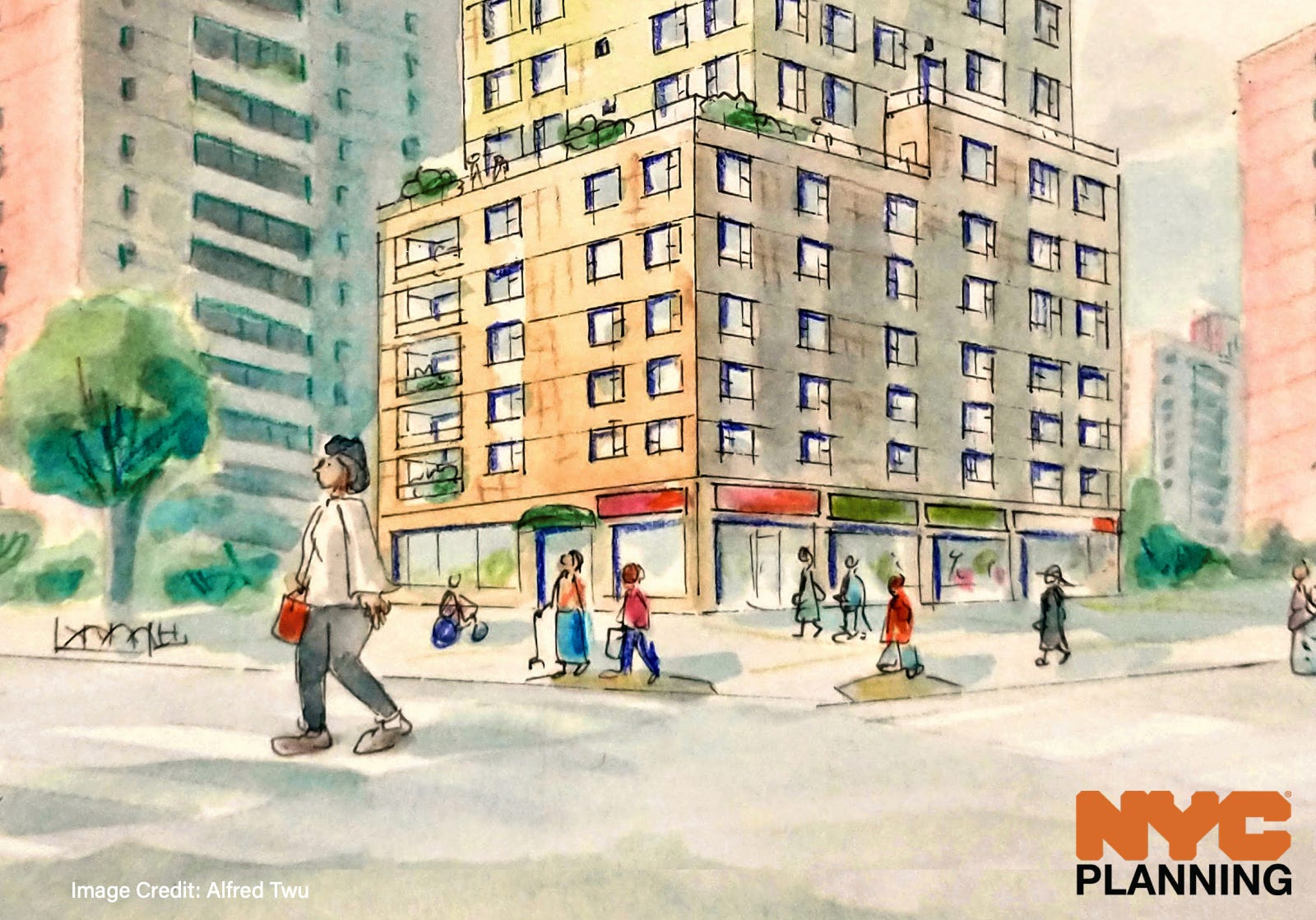
But the New York City Charter Revision Commission—a body tasked with proposing improvements to the city’s charter—aims to strike at the roots of New York City’s housing shortage. Collectively, the amendments on this year’s ballot would depoliticize the process of approving new housing developments, turning chaotic, discretionary reviews into a streamlined, ministerial process.
Because the zoning is so restrictive in New York City, most new housing developments require some sort of ad hoc relief in order to start construction, such as a rezoning or a special use permit. This process—the Uniform Land Use Review Procedure, or ULURP—adds nearly seven months of delays (and no fewer than four public hearings) to the process of building new housing.
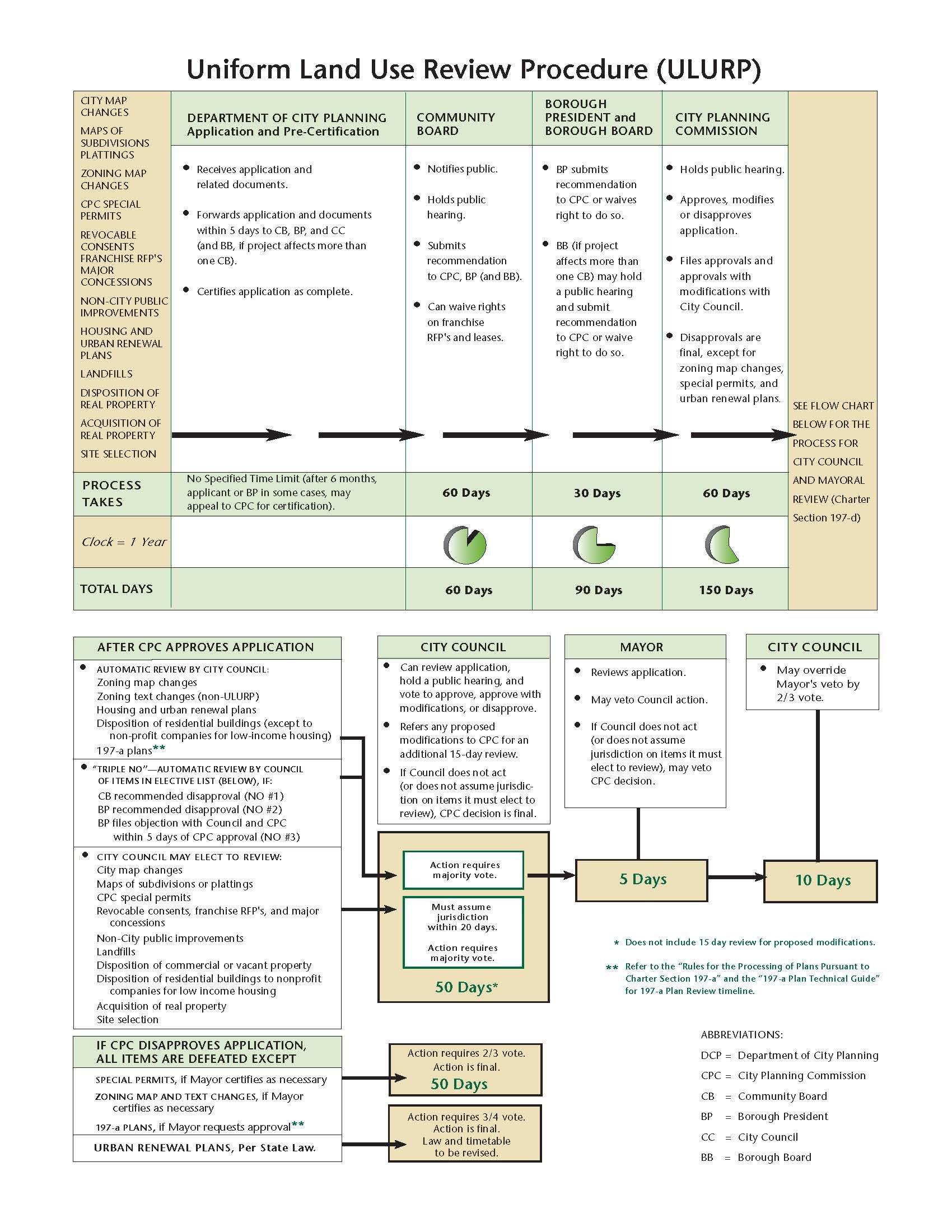
Worse yet, it’s all a bit of a farce: Through a practice known as “member deference,” if the local council member doesn’t like the project, the entire City Council will vote to kill it at the end of the review process, even if the City Planning Commission recommends approval.1 Putting all of this power in the hands of one individual is a recipe for corruption and exclusion.
The proposed charter amendments would speed up this process and remove the politicians, without necessarily compromising on public input.
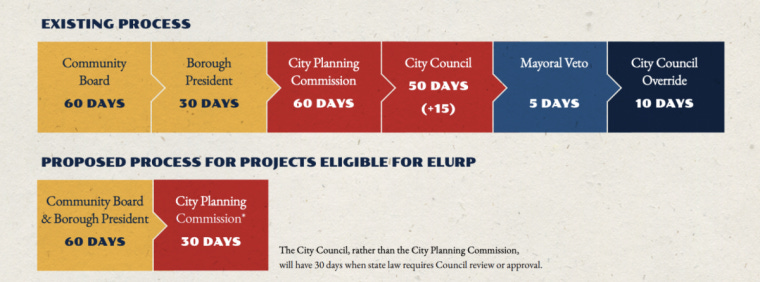
As it appears on the ballot, Question Two would expand the ability of the mayor-appointed Board of Standards and Appeals (BSA) to provide direct zoning relief to projects receiving public funding.2 In the 12 neighborhoods that have produced the least affordable housing in recent years, it would slash the review timeline in half, and empower the City Planning Commission to make the final call on individual projects.
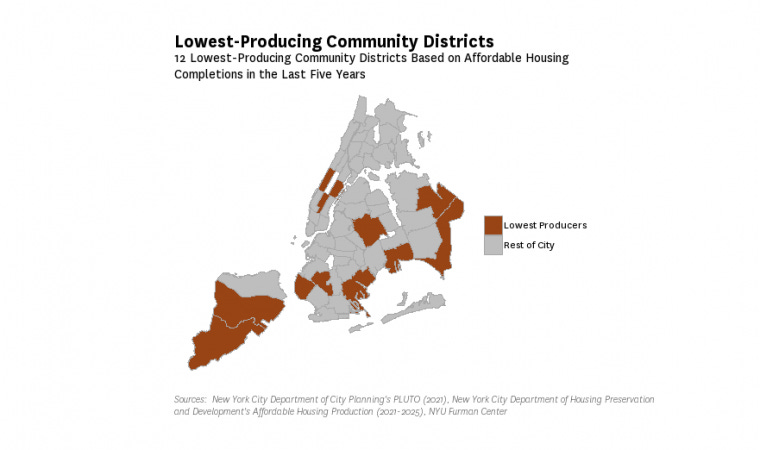
In addition to expanding the overall supply of housing, this would ensure that “off-limits” exclusionary neighborhoods in Manhattan and the Outer Boroughs permit their fair share of affordable housing.
Question Three would create a new “Expedited Land Use Review Procedure,” again halving review times and prudently limiting City Council involvement in a broad array of projects—including small-scale upzonings. Unique among major US cities, New York City has done little to encourage “missing middle” low-rise multifamily housing. If this amendment were to pass, it would be a lot easier to make such changes.
Even if these first two amendments were to pass, many new developments would still need to undergo the full traditional public review process. To reduce abuse, Question Four would create an “Affordable Housing Appeals Board” composed of the mayor, speaker of the City Council, and relevant borough president. This board would be able to reverse the City Council when they reject projects that include affordable housing.3
These changes reflect best practices: Down the Northeast Corridor, the Council of the District of Columbia—Washington, DC’s legislative body—adopts a comprehensive plan for the city, but otherwise plays little role in reviewing individual projects. Instead, an appointed Zoning Commission renders decisions on individual projects. As a result, DC has permitted five times as much housing per capita as New York City in recent years.
The success of DC hasn’t stopped the New York City Council from pulling out all the stops to oppose the amendments. Over the summer, the City Council voted to increase its “postage and mailing” budget from $1 million to $2.3 million—a rounding error that largely escaped notice in a $116 billion budget. This taxpayer money has been spent mailing out fliers and purchasing social media ads telling taxpayers to oppose the pro-housing charter amendments.
Curiously, one City Council-funded flier asserts that speeding up the review process for affordable housing will result in less affordable housing. Happily, New Yorkers pride themselves on being able to sniff out bullshit.
The winner of this year’s mayoral election will doubtless play a big role in setting the “vibe” of the city for the next four years. But if New Yorkers want something more substantive, the real action will be in passing pro-housing charter reform and getting the Big Apple building again.
Are you a YIMBY in Greater New York? I would strongly encourage you to get involved with Open New York. Become a member, follow them on social media (X, Bluesky, Threads, Instagram), and start going to meetings!
In Chicago—where this phenomenon is taking to an unusual extreme—this is called aldermanic privilege.
If you would like to go even further in the weeds, this Furman Center blog post has what you’re looking for. You can also read the full text of the amendments here.
I don’t discuss it here, because it’s a wonky, common sense “good government” measure, but you should also vote “YES” on Question Five.
If these propositions are so good, then why has Mamdani thus far not endorsed them. He has some major reservations. What are they.